Ben Russell · 2 September 2026
The local council has approved plans to expand the Warmstone quarry following a series of public hearings and environmental reviews. The decision permits an increase in extraction operations on land adjacent to the existing site, with work expected to begin later this year. Proponents argue the move will secure long-term supplies of building stone while supporting employment in the region.
Expansion Details and Economic Benefits
Under the approved scheme the quarry footprint will grow by 25 hectares. Extraction volumes are projected to rise by 40 percent over the coming decade, yielding limestone primarily for construction and heritage restoration projects. Council documents indicate the development will create 50 direct jobs and generate additional indirect employment through haulage and processing contracts. Strict conditions require dust suppression measures, restricted operating hours and annual environmental audits to mitigate impacts on nearby properties.
Officials emphasised that the quarry supplies stone matching the character of historic buildings across the district, reducing the need for imported materials. Revenue from the expanded operations is expected to contribute to local infrastructure funds, including road maintenance programmes serving rural communities.
Local Concerns and Heritage Considerations
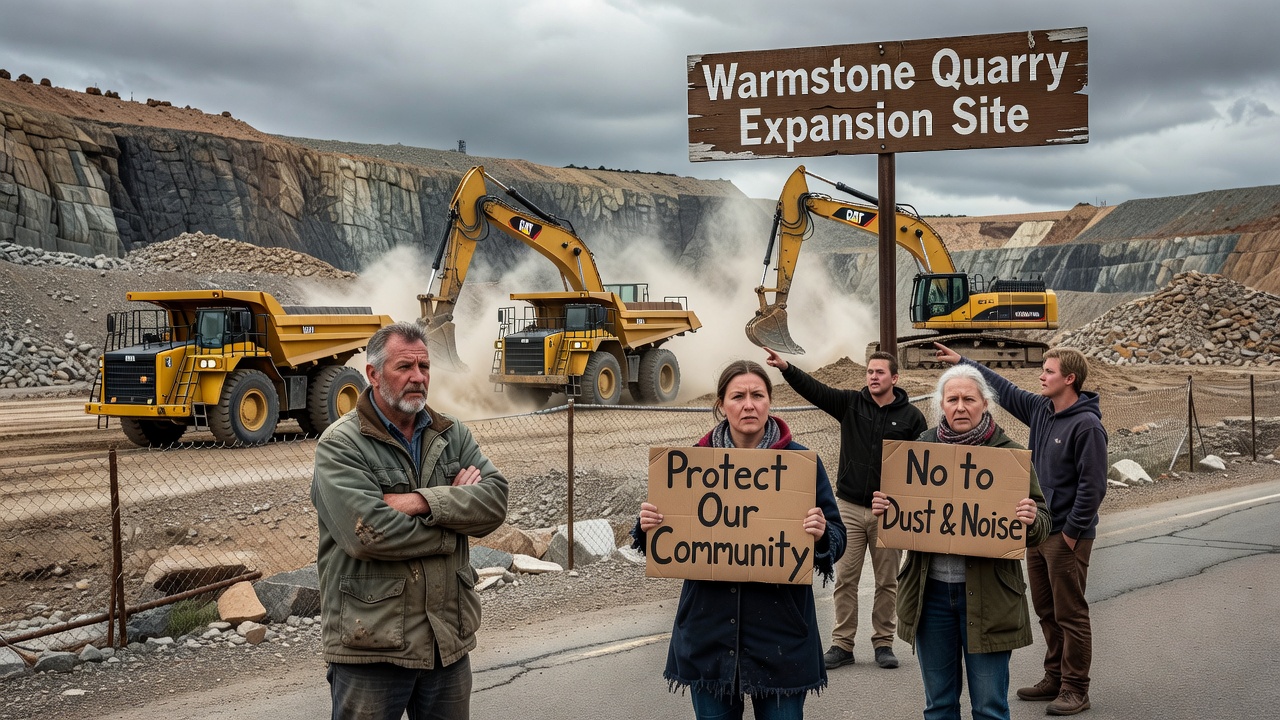
Residents living within two kilometres of the site have voiced objections centred on increased heavy-vehicle traffic, noise and potential effects on air quality. Several heritage organisations submitted evidence highlighting the archaeological sensitivity of the surrounding landscape, which contains traces of Roman and medieval activity. The Warmstone Heritage Journal noted that further surveys will be required before any groundworks commence in previously undisturbed areas.
Campaigners have called for stronger protections around designated conservation zones and questioned whether cumulative impacts from multiple nearby mineral sites were fully assessed. The council responded that independent consultants reviewed all representations and that monitoring protocols will remain in place throughout the operational period. A liaison committee involving residents, operators and heritage advisers will meet quarterly to address emerging issues.